The Waiting Room Around the Instrument: A Seven-Day Shared-Equipment Review

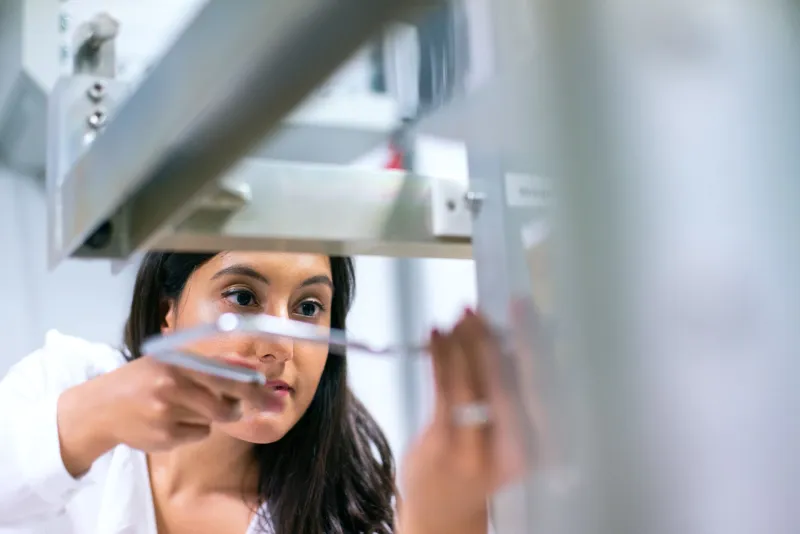
Photo by Photo by Logan Gutierrez on Unsplash on Unsplash
Shared equipment problems seldom announce themselves as failures. They appear as waiting: a student standing beside a microscope at 10:15 a.m., a sample queue forming near a centrifuge, a collaborator asking for “just five minutes” on a instrument that is already booked. These delays are real, but they are often invisible in the official schedule. A calendar can show a fully reserved week while concealing long idle gaps, repeated block-booking, and informal use that never receives a timestamp.
A seven-day shared-equipment review offers a modest remedy. It is not a formal capacity study, and it should not be presented as one. It is an operational snapshot: enough structured observation to reveal patterns, distinguish true scarcity from habitual scheduling, and give students and research staff a defensible starting point for changes.
Why a Week Is Enough to See the Pattern
A single day tends to exaggerate local conditions. Monday mornings may be unusually crowded; Friday afternoons may be unusually quiet. A full week captures recurring rhythms without demanding a month of administrative attention. The goal is not to measure every minute of instrument use with laboratory-grade precision. The goal is to answer three practical questions: How long do people actually wait? How closely do reservations match reality? And which interruptions are routine enough to plan for?
Choose a representative week and avoid holidays, major conference travel, or instrument downtime. If the lab shares several instruments, begin with the one that generates the most informal complaints. Assign one person to maintain the log, but ask users to contribute entries at the point of use. A clipboard near the instrument is often more reliable than a retrospective survey.
What to Log Without Creating a Second Job
The audit should be lightweight. A shared spreadsheet with six fields is sufficient: date, instrument, scheduled start and end times, actual start and end times, wait duration, and a brief interruption note. Add a column for whether the user had a reservation. This last field is essential because informal access can account for a surprising share of apparent congestion.
Users should record three kinds of events. First, reservation accuracy: Did the session begin and end when planned? Second, queue time: How long did a user wait beyond the scheduled start? Third, interruption: Did someone request a quick measurement, a calibration check, or a training demonstration during the session? These entries need not include names. The purpose is to describe the system, not to build a case against an individual.
A simple note such as “15-minute wait; prior user overran by 20 minutes” is more useful than a vague complaint. Similarly, “no reservation; asked for quick reading” identifies a different problem than “reserved two hours; used forty minutes.” The categories matter because they point toward different remedies.
Separating Capacity from Custom
After the week ends, sort the entries into two broad groups. The first group describes capacity: waits that occur across many hours, high use of available slots, and interruptions caused by genuine demand exceeding supply. The second group describes custom: waits concentrated around particular times, instruments left idle after long reservations, and informal requests that could be scheduled elsewhere. A lab may have both problems at once, but they should not be conflated.
Two simple ratios help. Reservation yield compares actual instrument time with booked time. If many reservations yield less than half their allotted time while others wait, block-booking deserves attention. Wait frequency compares the number of users who waited with the number of scheduled sessions. If waits are frequent but short, the issue may be turnover and handoff rather than total capacity. If waits are long and widespread, the lab may need to revisit access rules, staffing, or equipment acquisition.
Block-booking is one of the most common habits the audit will expose. A researcher reserves a four-hour window “just in case,” then uses the instrument for ninety minutes. The unused time is not visible as capacity because the calendar still says occupied. Vague time estimates create a related problem: a protocol described as “about two hours” may routinely require three. Neither habit is malicious. Both become costly when a shared instrument is under pressure.
A Short Action List for the Next Two Weeks
The audit is only useful if it produces a small number of changes that can be tested. Keep the first action list short enough to implement before the next monthly lab meeting.
- Convert recurring long reservations into shorter initial slots, with an option to extend if the instrument is free.
- Ask users to submit estimated duration ranges rather than single-point guesses, and post a simple release rule for unused time.
- Create a visible daily schedule near the instrument or in the lab’s shared workspace so informal users can see availability before interrupting a session.
- Route recurring “quick check” requests into a designated window or office-hour block rather than allowing them to fragment reserved sessions.
- Assign one owner to review the log after two weeks and report whether waits, overruns, or interruptions changed.
These measures are deliberately modest. They are easier to sustain than a new scheduling platform and easier to evaluate than a general appeal for better communication.
What Not to Conclude
A one-week audit cannot establish long-term capacity needs, and it should not be used to rank individual lab members. It also should not become an argument for purchasing a new instrument before the team has examined reservation yield and informal access. The most common finding is not that the lab lacks equipment entirely, but that a portion of available time is poorly signaled, unevenly reserved, or interrupted by unplanned requests.
For students, the review offers a lesson in operational evidence: a small, well-designed log can clarify a problem that anecdotes obscure. For research staff, it provides a defensible basis for adjusting schedules without relying on impressions. The instrument may still have a queue. With a week of structured observation, however, the lab can at least know what kind of queue it is.