The Null-Result Ledger: A Public Archive for Experiments That Did Not Pan Out
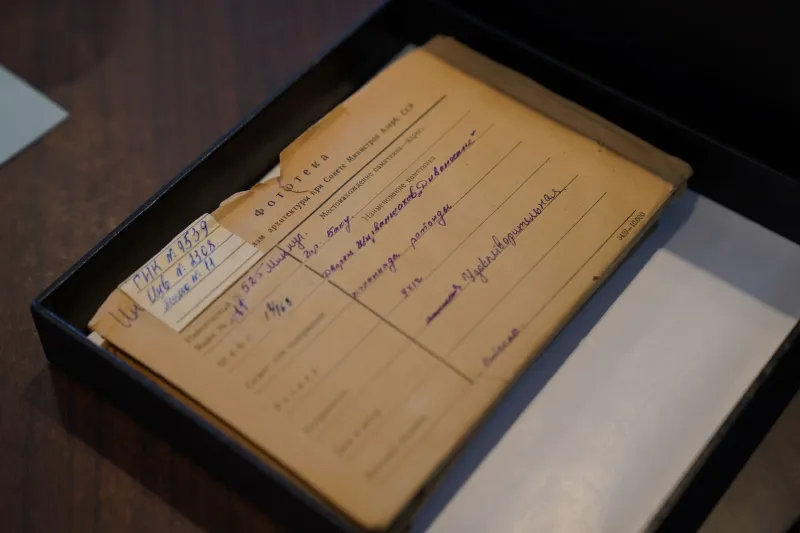
Most labs maintain a shadow record of experiments that failed, stalled, or never produced a clean answer. These records live in shared drives, paper notebooks, and the memories of departing students. The result is a quiet form of waste: work that consumed time and reagents but cannot teach anyone outside the group. A public null-result ledger offers a corrective. It is not a dump of raw notebooks and not a substitute for peer-reviewed publication. It is a curated, searchable register of what was tried, what happened, and what a future researcher should know before repeating the attempt.
Why a shelf, not a graveyard
A null result is not automatically a failure. It may be an inconclusive pilot, a method that did not transfer to a new sample, or a replication attempt that found a smaller effect than expected. Such outcomes are valuable because they define boundary conditions. They tell students which instrument settings drift, which recruitment strategies underperform, and which assays are fragile in a particular tissue type.
The case for public access is practical. In the United States, federally funded labs are already expected to manage and share data under funder policies and institutional guidelines. A null-result ledger extends that logic to a class of evidence that formal publications often omit. It also supports training: a new graduate student can read why a prior student abandoned a protocol before spending three months rediscovering the same obstacle.
Scope the archive before building it
A small lab should not attempt to publish everything. Begin with a narrow scope: method pilots, instrument calibration trials, replication attempts, and discontinued sub-studies. Exclude patentable compounds, collaborator-owned data, human-subjects records that cannot be de-identified, and anything under a sponsor embargo.
A useful triage question is this: would a reasonable researcher in the same field benefit from knowing that this was tried? If the answer is yes, create an entry. If the answer is no, keep the material in an internal ledger. The public archive should be a finding aid, not a confessional.
Consider two illustrative US cases. A two-person ecology lab at a regional public university might log calibration trials for field sensors that performed poorly in humidity. A biomedical group at an academic medical center might record assay optimization attempts that never reached a publishable effect size. Neither lab needs to release identifiable data or proprietary sequences. Both can release a structured summary.
A practical entry template
A lightweight entry can be completed in twenty to thirty minutes if the lab adopts a consistent template. At minimum, record:
- Entry identifier and version.
- Date range and status: completed, discontinued, or inconclusive.
- Lab or team name, contact person, and funding source.
- Plain-language question and rationale.
- Design summary: sample, conditions, intervention, and primary outcome.
- Result summary with direction and uncertainty, not only a significance test.
- Reason the work stopped or remained inconclusive.
- Boundary conditions and the next test that would be informative.
- Data and code availability, or a statement that they are not available.
- License and preferred citation.
- Keywords and date of last review.
This template keeps entries comparable. It also prevents the archive from becoming an unstructured collection of PDFs. A lab can maintain the master file as a spreadsheet and export a public CSV with the same fields.
Permissions, intellectual property, and privacy
Before any entry becomes public, assign an owner and obtain written approval from the principal investigator. If the work involves collaborators, confirm that each party has reviewed the text. Route potentially patentable material through the institution's technology transfer office. Check sponsor terms and any applicable institutional review board or animal care and use committee requirements.
Redact personal information, student grades, patient identifiers, precise locations of sensitive species, and security-sensitive facility details. Use embargoes where needed. A lab can publish a title and contact point immediately while holding back methods for a fixed period. For licensing, many groups use a Creative Commons Attribution license for explanatory text and a separate data license for datasets. Deposit the public record in a repository such as OSF or Zenodo to obtain a persistent identifier.
Hosting and metadata for a small lab
A public archive does not require custom software. A repository project, a static page, and a CSV export are sufficient to begin. Use controlled vocabulary for fields such as status, method type, and outcome category. Include a DOI or handle, a version number, and a last-reviewed date. Make the search interface simple: keyword, year, method, and status.
The most common failure mode is neglect. Assign a rotating editor, review entries quarterly, and add a short annual summary. The goal is not to shame failure but to make uncertainty legible. A lab that can show students how it learns from dead ends is practicing better science communication inside the research group itself. For NI Lab readers, the ledger is a small piece of lab infrastructure with an outsized training value.